Your Hudson Valley Wedding Rain Plan: Tents, Indoor Backups, and Why Overcast Days Make Better Photos
Rain plan logistics for a Hudson Valley outdoor wedding. Tent costs, decision timelines, venue backup options, and why overcast days make better photos.
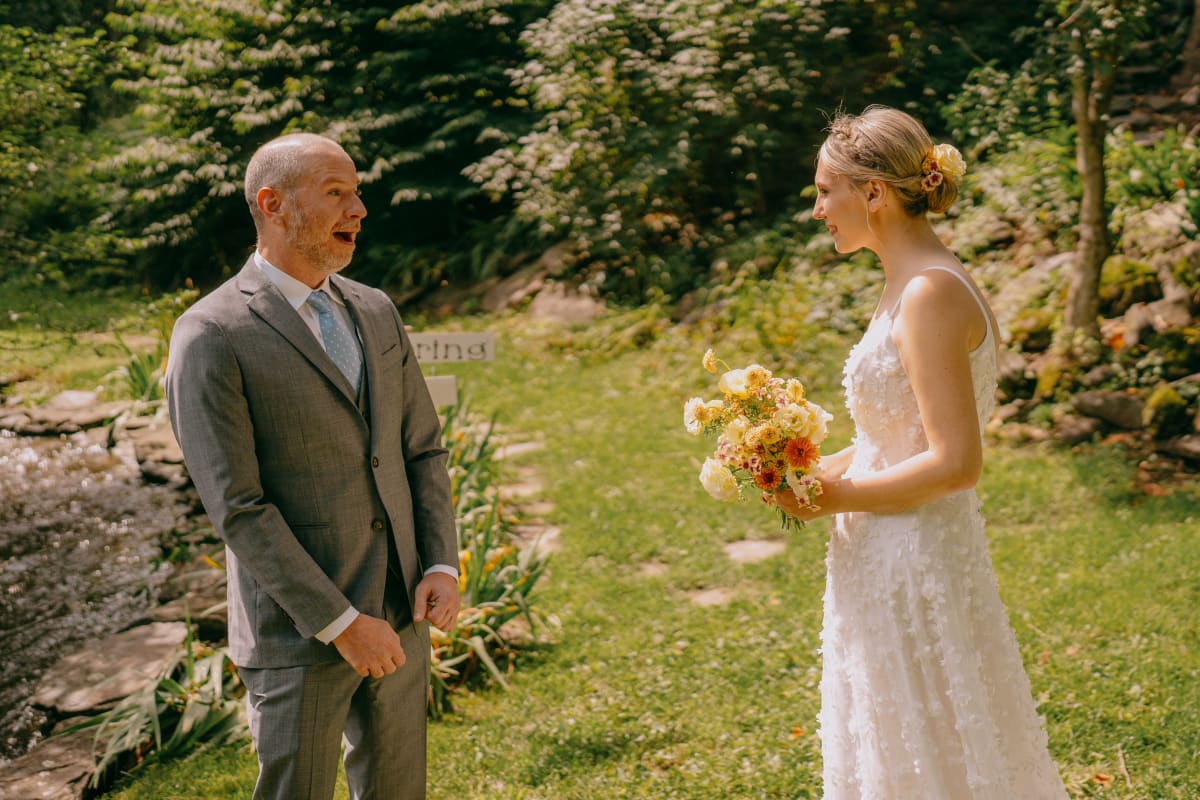
Rain on your wedding day is not the disaster you're imagining right now. I've photographed over 500 weddings in the Hudson Valley and Catskills. Rain has appeared at probably 80 of them. Not one of those weddings was ruined. A few were worse because the couple didn't have a rain plan. The rest were fine, some of them better than fine.
This post is about logistics: what a rain plan costs, when to make the call, and which Hudson Valley venues handle weather best. For the photography side of rainy wedding days, I wrote a separate piece on why overcast light produces better portraits.
The Decision: When to Call It
The hardest part of a rain plan isn't having one. It's deciding when to activate it.
Most couples start checking weather forecasts obsessively two weeks out. Ignore anything beyond five days. Weather forecasting in the Hudson Valley is unreliable past 72 hours because the terrain (river valley, mountain ranges, variable elevation) creates microclimates. I've driven from sunny Newburgh to rainy Big Indian in 40 minutes.
The real decision window is 48 hours before the ceremony. By Wednesday before a Saturday wedding, the forecast gives you reasonable probability. By Friday morning, you should have a solid read.
Your contract with the tent company (if you have one) will specify when you need to confirm setup. Most require 48 to 72 hours notice. Your venue coordinator or planner should manage this call in conjunction with you.
The mistake I see couples make: waiting until the morning of the wedding to decide. By then, your tent company can't set up in time, your florist hasn't adjusted the ceremony decor plan, and your coordinator is scrambling. Make the call by the day before. Rain that starts at 3pm doesn't care that you were hoping it would hold off until 6pm.
Tent Options and Costs
If your outdoor ceremony or reception doesn't have a built-in indoor alternative, a tent is your rain backup. Here's what the options cost in the Hudson Valley market.
Frame tent (clear-span, no center poles). The standard for wedding tents. A 40x60-foot tent covers about 120 seated guests for dinner. Cost: $3,000 to $6,000 for the tent rental. Add sidewalls ($500 to $1,000), lighting ($500 to $1,500), flooring ($1,000 to $3,000 for subflooring on uneven ground), and climate control ($500 to $2,000 for fans or heaters depending on season).
Total for a complete tent setup: $5,000 to $12,000+ depending on size and accessories.
Sailcloth tent. The prettier option with peaked tops and a warmer aesthetic. Costs 20 to 40% more than a standard frame tent. Budget $6,000 to $10,000 for a 120-person setup before accessories.
Pop-up or emergency tent. Not a real option for a ceremony or reception. These are for cocktail hour backup or a small area covering the bar. A 20x20 pop-up runs $300 to $800.
Tent rental companies in the Hudson Valley: Columbia Tent Rentals, PEAK Event Services, Durants Party Rentals, and Hudson Valley Tent. Get quotes from at least two. Pricing varies significantly, and some include setup/teardown while others charge separately.
The standby tent question. Some couples reserve a tent on standby, paying a reduced hold fee with the full cost activated only if the tent goes up. Not all companies offer this. The standby fee is typically 30 to 50% of the full rental cost, non-refundable. If rain is a reasonable possibility for your season (and in the Hudson Valley, it always is), the standby fee is worth budgeting.
Venue Rain Plan Comparison
Your venue's built-in rain options should factor into your booking decision.
Venues with strong indoor alternatives:
Troutbeck has multiple indoor ceremony locations within the estate. If it rains, you move inside without losing the atmosphere. The interiors have character and photograph well.
Hasbrouck House has covered and indoor spaces that serve as ceremony backup. The stone architecture works in your favor indoors.
Seminary Hill's taproom provides indoor backup for ceremonies, and the space has enough visual interest that the indoor version doesn't feel like a compromise.
Foxfire Mountain House has a restaurant interior and covered spaces. Smaller weddings can move entirely indoors.
Venues where rain requires a tent:
Blooming Hill Farm ceremonies happen in the fields. Rain means a tent over the ceremony site or moving to the barn earlier than planned. Budget for tent backup if you're getting married here between May and October.
Full Moon Resort has some covered areas but outdoor ceremonies at the main lawn need a tent backup for rain. The property is large enough that tent placement is flexible.
Gather Greene's ceremony hilltop is fully exposed. Rain means a tent or moving to the event structure. Plan and budget accordingly.
Venues with limited backup:
Private estates and Airbnb properties generally have no rain backup built in. You're responsible for the full tent plan. This is the most common place where blank canvas weddings underbudget.
The Photographer's Perspective on Overcast Days
I'll keep this brief because I've written more about it elsewhere, but overcast skies produce some of the best wedding portrait light I work with.
Direct sun at 2pm in July creates harsh shadows under eyes, squinting faces, and blown-out backgrounds. An overcast sky at 2pm in July creates soft, even light that flatters skin tones and makes colors pop. The couple can face any direction without squinting. I can shoot anywhere on the property without chasing shade.
I've produced some of my favorite portrait work on overcast and rainy days. The light is consistent, predictable, and forgiving. If your ceremony gets rained out and you move inside, I'll get great ceremony photos. When the rain pauses for 15 minutes and you step outside for portraits, the soft post-rain light with wet greenery in the background produces images that sunny-day couples don't get.
Rain changes your day. It doesn't ruin your photos.
Timeline Adjustments for Rain
Rain compresses your timeline because outdoor activities move inside and overlap. Build buffer into your schedule.
Cocktail hour in rain: If cocktail hour was planned for a patio or lawn, it moves inside or under a tent. Indoor cocktail hour spaces feel tighter. Your DJ or band should be prepared for the shift. Your caterer needs to know the serving location may change.
Portraits in rain: I can work with rain. Umbrellas make good props. Covered porches, barn doorways, and overhangs create sheltered portrait spots. But rain portraits take more time because we're working around weather windows. Build an extra 15 minutes into the portrait block.
Guest movement: Walking between ceremony, cocktail hour, and reception in rain is the logistical headache. If your venue has these areas spread across the property, rain means wet guests. Umbrellas at each transition point (provided by you or the venue) help. Some venues have golf carts for guest transport in bad weather.
The Insurance Question
Wedding insurance that covers weather-related cancellation or postponement is available through companies like WedSafe and Wedsure. Policies that cover "adverse weather" causing venue closure or vendor no-shows cost $200 to $500 depending on coverage limits.
Standard wedding insurance covers vendor no-shows, illness, and property damage. Weather coverage is usually an add-on. Read the policy details because "rain on your wedding day" and "venue closed due to weather emergency" are different triggers with different coverage.
Worth the cost? If you're having an entirely outdoor wedding with no backup venue and a $50,000+ budget, yes. The peace of mind alone is worth a few hundred dollars.